Protected Natural Space between the Municipalities of Pego and Oliva
The Marjal de Pego-Oliva, located northwest of Denia and covering an area of 1,255 hectares, holds various recognitions due to its significant environmental importance. Since 1994, it has been classified as a Natural Park, the highest level of environmental protection granted by the Generalitat Valenciana, and has received several titles that highlight its global relevance, such as its inclusion in the Ramsar Convention for the protection of wetlands of international importance. Additionally, it is part of the Natura 2000 Network of the European Union and has been designated as a Special Protection Area for Birds.
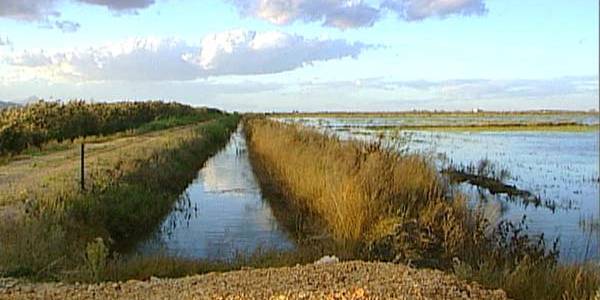
This territory is situated on the border between the provinces of Alicante and Valencia, encompassing portions of the municipalities of Pego and Oliva. Within its boundaries, it hosts a rich diversity of habitats such as marshes, lagoons, dunes, and coastal wetlands, which play a fundamental role in conserving biodiversity and the integrity of the local ecosystem.
The Marjal de Pego-Oliva is renowned for its diversity of waterfowl and other species of fauna and flora. It serves as an essential place for the resting and feeding of migratory birds, as well as a suitable environment for the breeding of some species. Moreover, these wetlands fulfill a crucial function in conserving water resources and acting as natural water reservoirs, thereby helping to prevent flooding.
Due to the favorable conditions that this region presents in terms of water retention, soil quality, and the excellence of its water resources, rice cultivation has been a traditional practice since the Moorish period. In the Marjal de Pego-Oliva, approximately 90 hectares of its area are dedicated to rice cultivation, primarily focusing on the variety known as bomba rice. In the context of Denia and its region, which holds the title of Creative City of Gastronomy, there has been a special effort to recover a nearly extinct variety of rice, which perfectly adapts to the local cuisine, called bombón rice.
This area has been the subject of significant efforts in terms of conservation and restoration, aimed at preserving its ecological value and providing opportunities for recreation and birdwatching for visitors. In summary, the Marjal de Pego-Oliva represents an important natural space in the Province of Alicante and is of great interest to nature and ornithology enthusiasts.
Sections
Sections