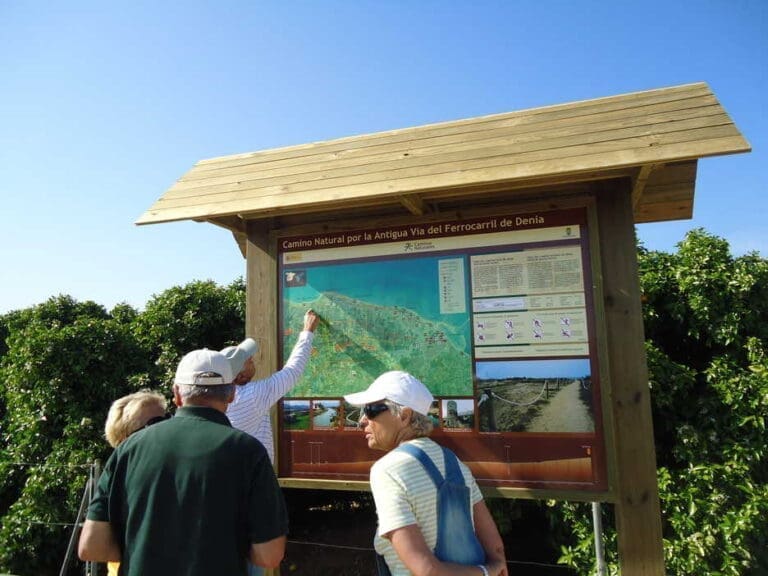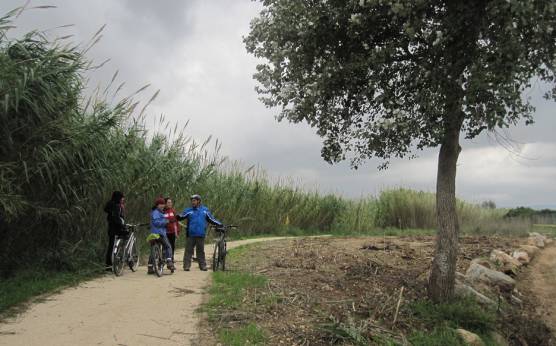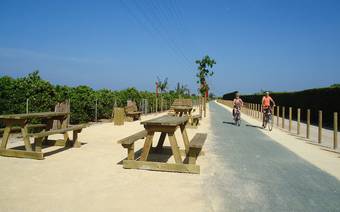
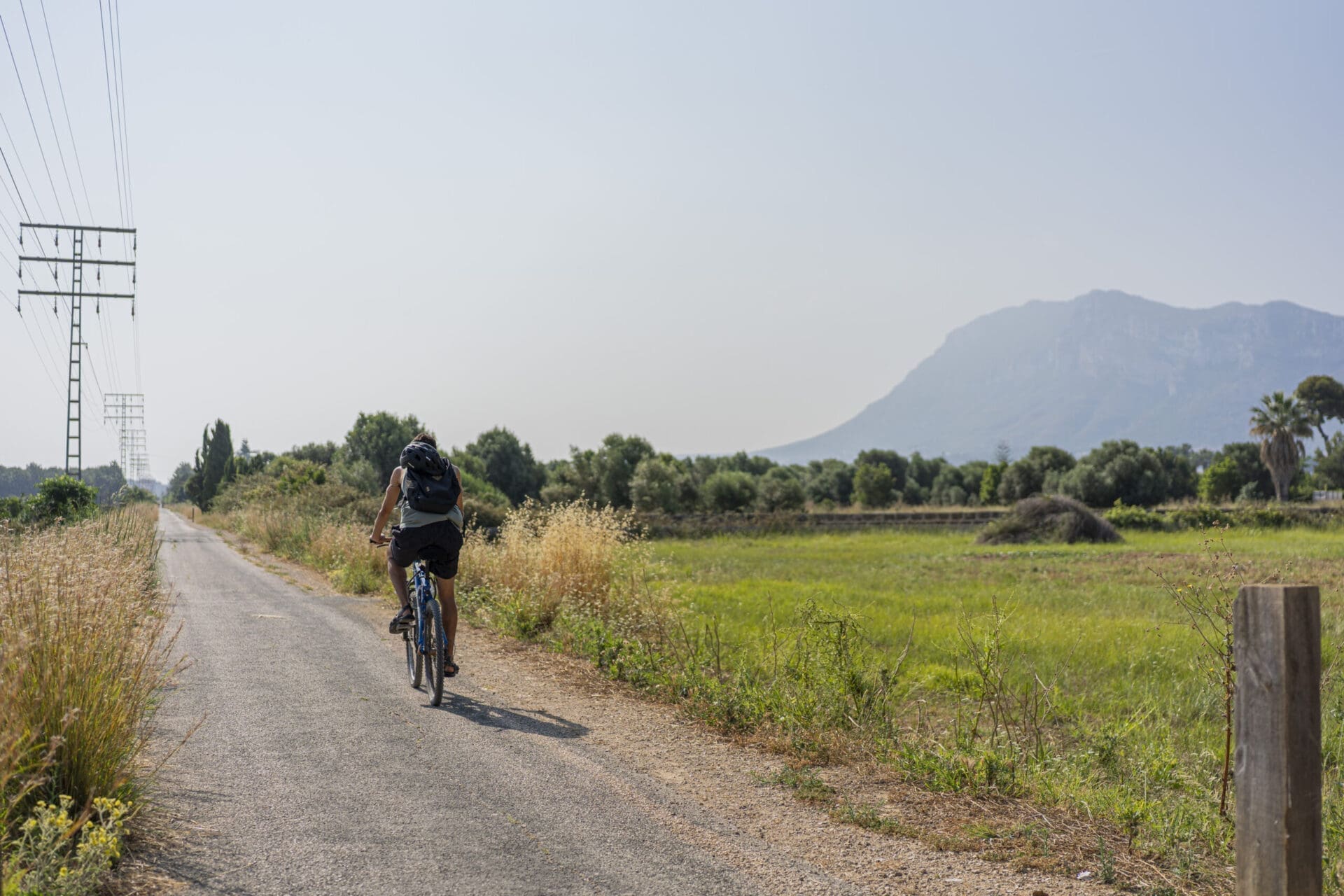
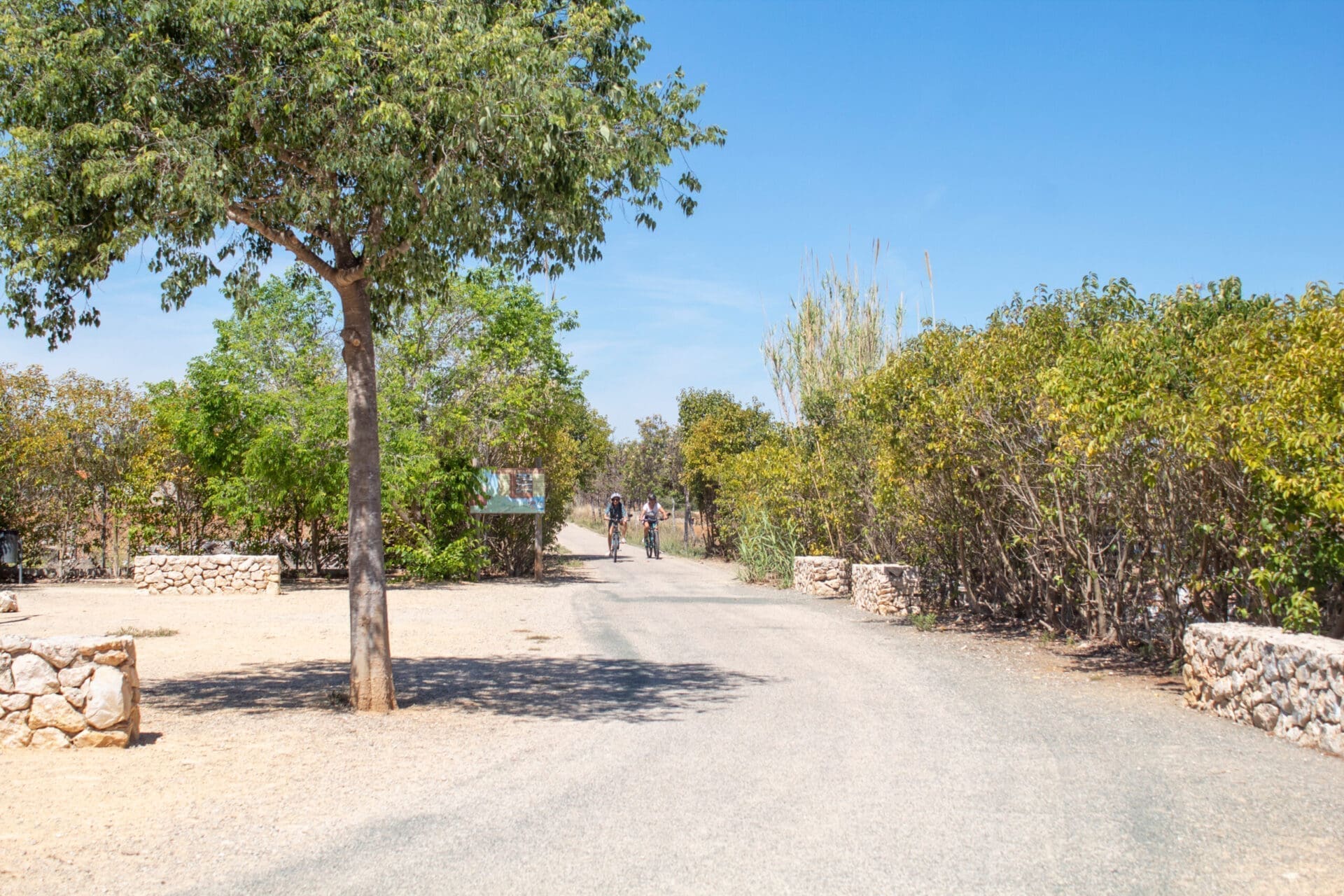
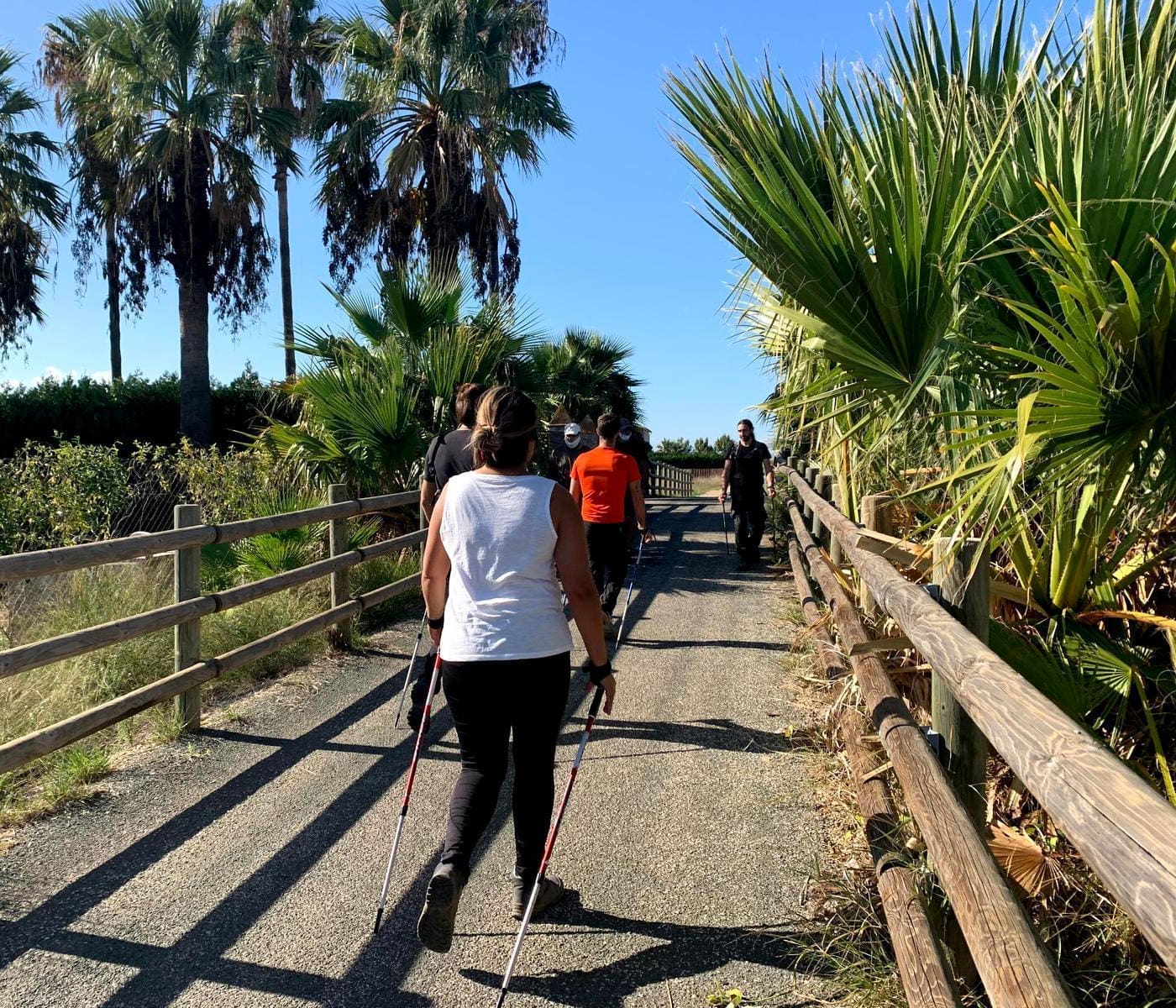
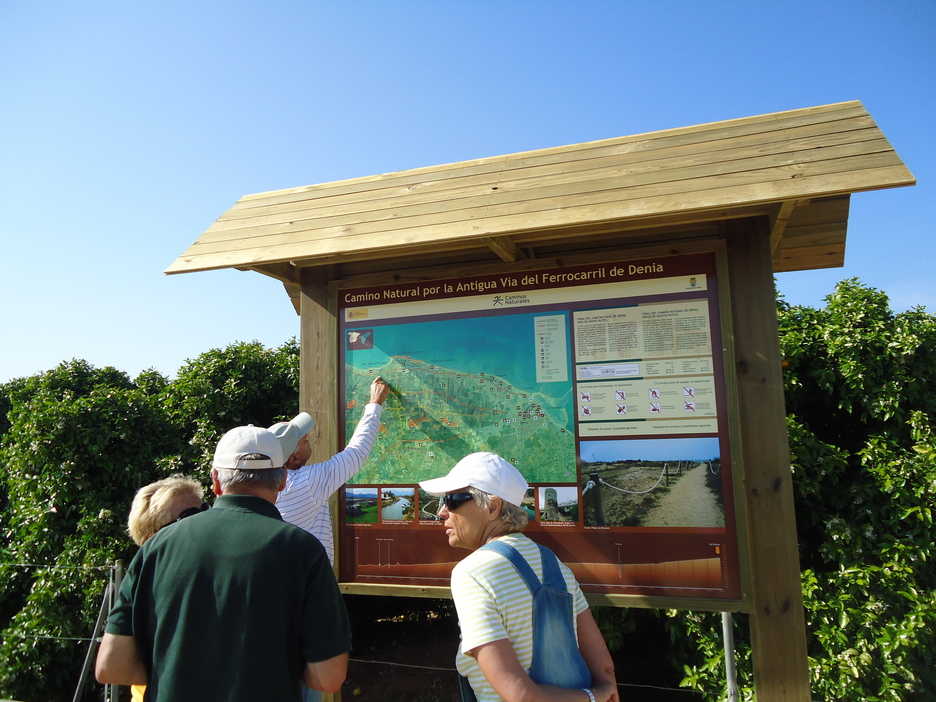
The Dénia Greenway (Vía Verde Dénia-El Verger) is one of the most pleasant and accessible routes in the municipality. It runs along the old railroad line that connected Dénia with Carcaixent (Valencia) and today has become an ideal way to walk, ride a bike or simply disconnect in a quiet and natural environment.
About5.9 km longbetween Dénia and El Verger, the road crosses orange groves, almond trees and traditional crops. The landscape is flat, open and very quiet, with views of the Montgó and the agricultural environment. It is perfect for gentle sports, walks with children or pets (always leashed) or simply to enjoy the outdoors without rushing.
If you want a longer route there is the option to continue and connect with the greenway of the Safor, through the Marjal Pego-Oliva, the spring of the Font Salada and the municipality of Oliva until you reach Gandia. With a length of approximately 40 kms from Dénia, the route can also be done in shorter stages.
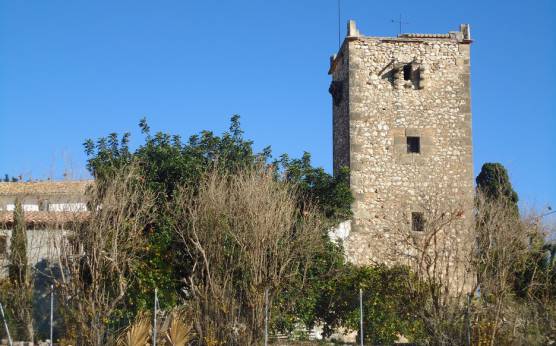
The greenway also offers variants: From the junction of the greenway with the Camí del Palmar there are detour options either to the Olivera del Diluvi and the Torre Carrals or to the Torre de L’Almadrava and the mouth of the Alberca River.
The Greenways are a simple and pleasant way to go for a walk, breathe fresh air and enjoy the scenery around Dénia. You don’t have to go far to find nature: sometimes, you just have to follow the old train path and let yourself go.
In the middle of the 19th century, the engineer Vicente Alcalá de Olmo promoted the creation of a track that would revolutionize transport in the region: the first narrow-gauge “tram-way” in Spain, inaugurated in February 1864 between Carcaixent (Carcagente) and Gandía, driven by mules and horses over 35 km with a track gauge of 1,380 mm. It was a pioneering solution designed for slow but effective agricultural transport at a time of intense citrus trade.
In 1882, after economic difficulties, the Government authorized its transformation into an economic railroad. The Marqués de Campo incorporated it into the industrial railway network and, in April 1884, the line was extended to Dénia, already as a metric track railroad (1 000 mm) with steam locomotives.
This line became vital for the transport of goods – from citrus to rice – to the ports and beyond, as well as for the movement of travelers and the emerging coastal tourism.
After passing through different hands -AVT, Compañía del Norte and finally FEVE after nationalization in 1942- the development of road transport accelerated its decline. In July 1969 the Carcaixent-Gandía section was closed and in February 1974 the last section to Dénia was closed, despite unfulfilled promises.
Today, the old train track has become the “Antic Trenet” Greenway, a path that allows you to cycle or walk along part of the historic route, linking villages, nature and memory. The Dénia station has been reborn as a Toy Museum, surrounded by numerous heritage projects that keep the history of the Trenet alive.