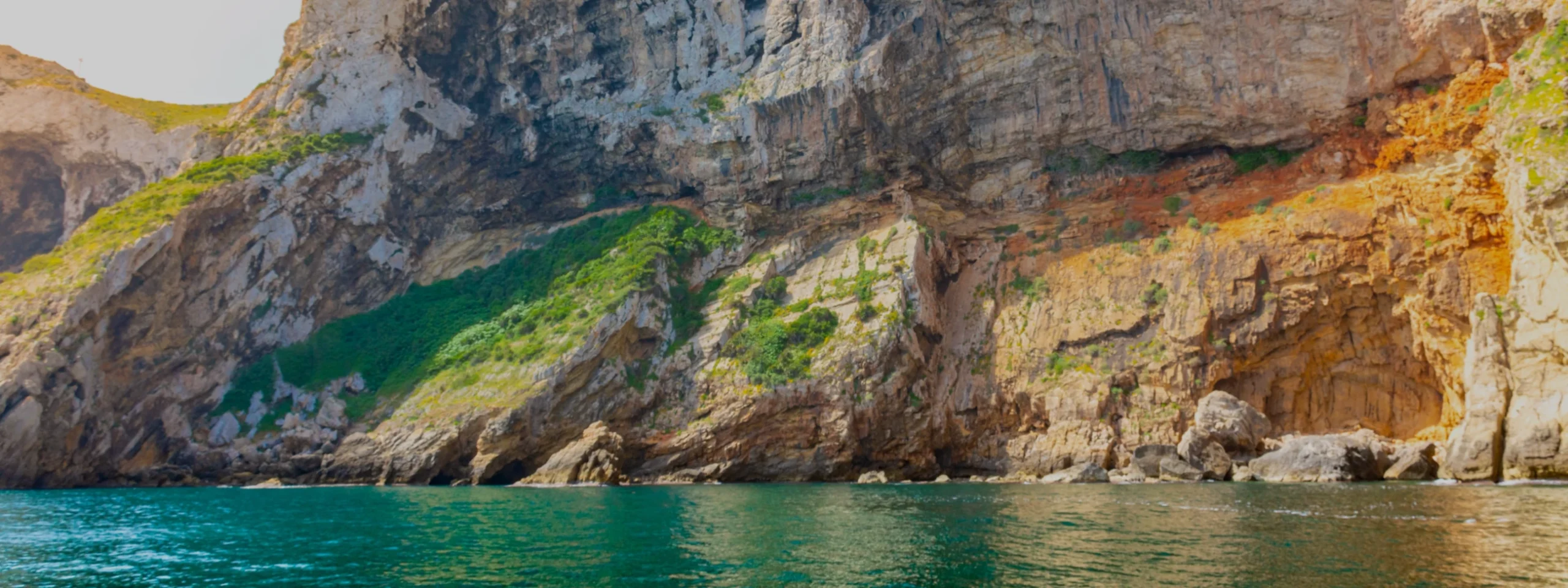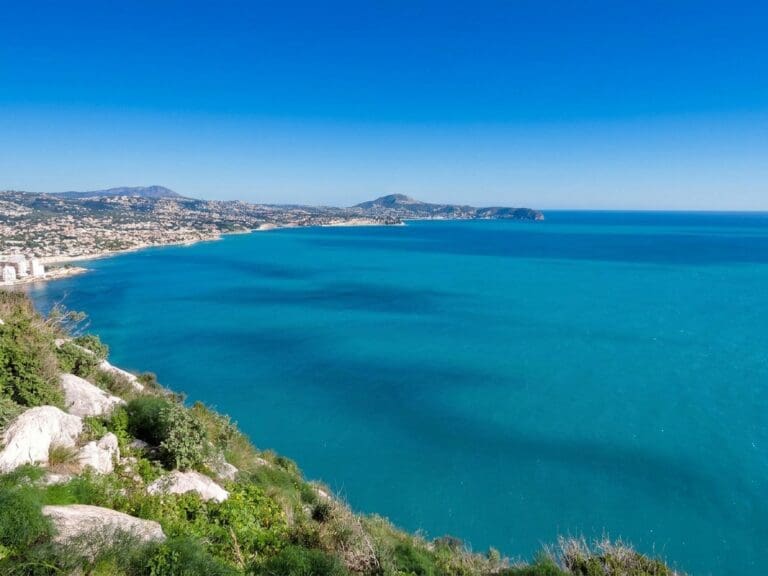
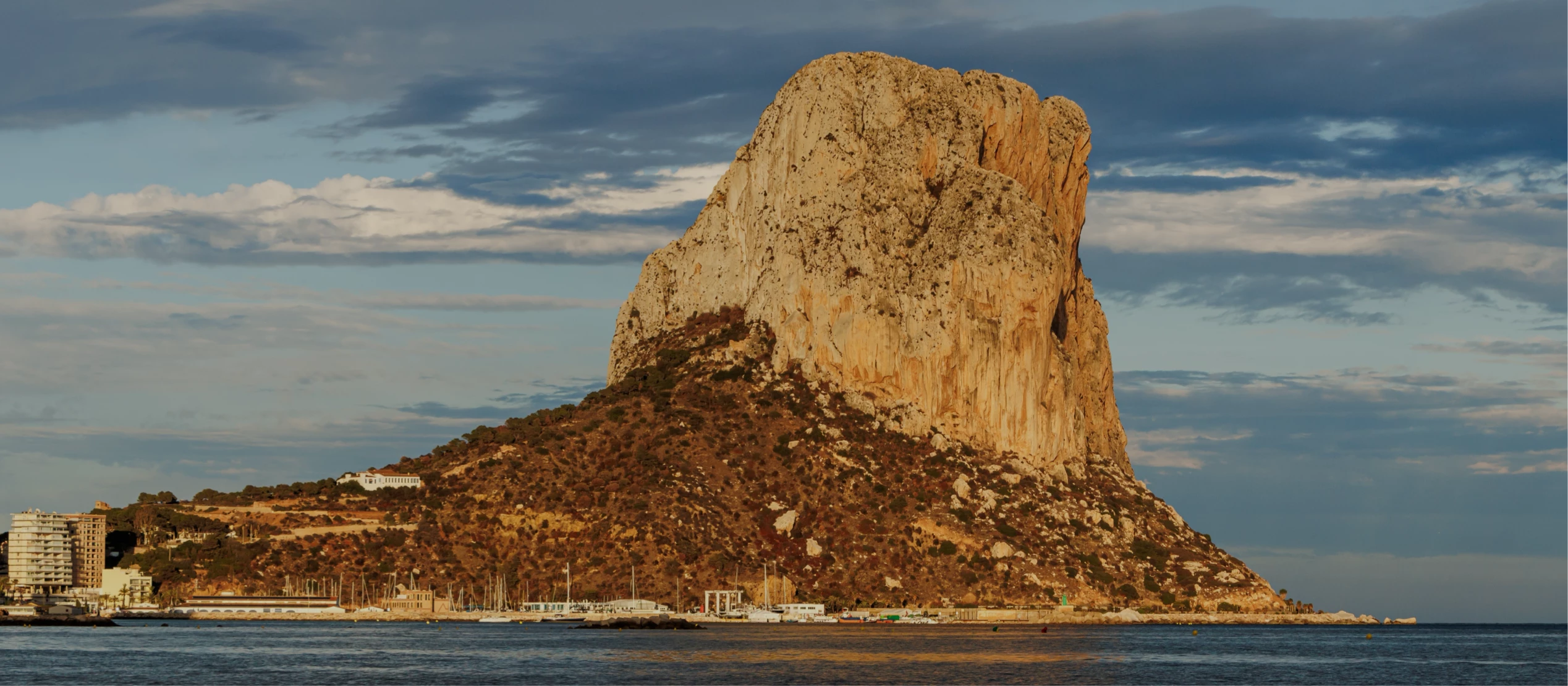
Throughout history it has also been an inhabited and strategic place. In the Iberian period it was home to communities that traded with other Mediterranean peoples, and in the Middle Ages the Pobla de Ifach was built, whose archaeological remains can still be visited, giving the area a great cultural value.
Today it is a popular destination for nature lovers and outdoor activities. Its hiking trails offer spectacular views, while climbing has more than 40 routes for all levels. The waters surrounding the rock are ideal for snorkeling and scuba diving, although it is important to note that access to the main route is limited to 300 people per day, so online reservations are required.
Peñon d'Ifach Interpretation Center
The Peñón de Ifach Visitor Center, located in Calpe, is the ideal starting point to discover this emblematic Natural Park. It offers practical information about the environment and provides visitors with an overview of its natural, historical and scenic wealth.
Practical information
In its facilities you will find a permanent exhibition dedicated to the flora, fauna and geology of the rock, as well as an educational classroom specially designed for schoolchildren. It also has audiovisual material, signposted interpretive routes and viewpoints, such as the Mirador de los Carabineros, which offer unforgettable panoramic views of the Mediterranean and the coast of Calpe. The center has specialized staff to answer questions and offer recommendations, as well as services such as toilets, parking and accessibility for people with reduced mobility.
Flora and fauna of the Peñón de Ifach
The Peñón de Ifach Natural Park is a unique enclave for its extraordinary biodiversity, which includes endemic, rare and endangered species of flora and fauna. On its slopes thrives a Mediterranean scrub with mastic, palm and black juniper, while in the reforestation of Aleppo pines there are abundant aromatic plants such as rosemary, thyme or lavender. The cliffs and rocky walls are home to species adapted to extreme conditions, such as the Ifach silene (Silene hifacensis), an endangered endemism that has become a symbol of the park. The botanical importance of the rock led to the creation of flora micro-reserves that protect exclusive species such as Webb’s thyme, which is only naturally present here.
The fauna also has a special value, with a prominent role of birds. The rock is a strategic point in the migratory routes, hosting both wintering and summer birds. Birds of prey such as the peregrine falcon and the common kestrel, seabirds such as the shag and the yellow-legged gull, and a good number of resident species, including the collared dove, the black wheatear and various warblers can be observed here. The combination of its location and habitats makes the Rock a true ornithological sanctuary.
In addition to this richness, there are other animal species, such as reptiles (the Iberian lizard or the Iberian skink) and mammals such as rabbits or common hedgehogs. Even the marine environment adds value to its biodiversity: in the waters surrounding the rock it is possible to see bottlenose dolphins, while on land there is the presence of unique endemic species such as the land snail Chondrina marina. All this makes the Peñón de Ifach a privileged place where nature and landscape meet in harmony.