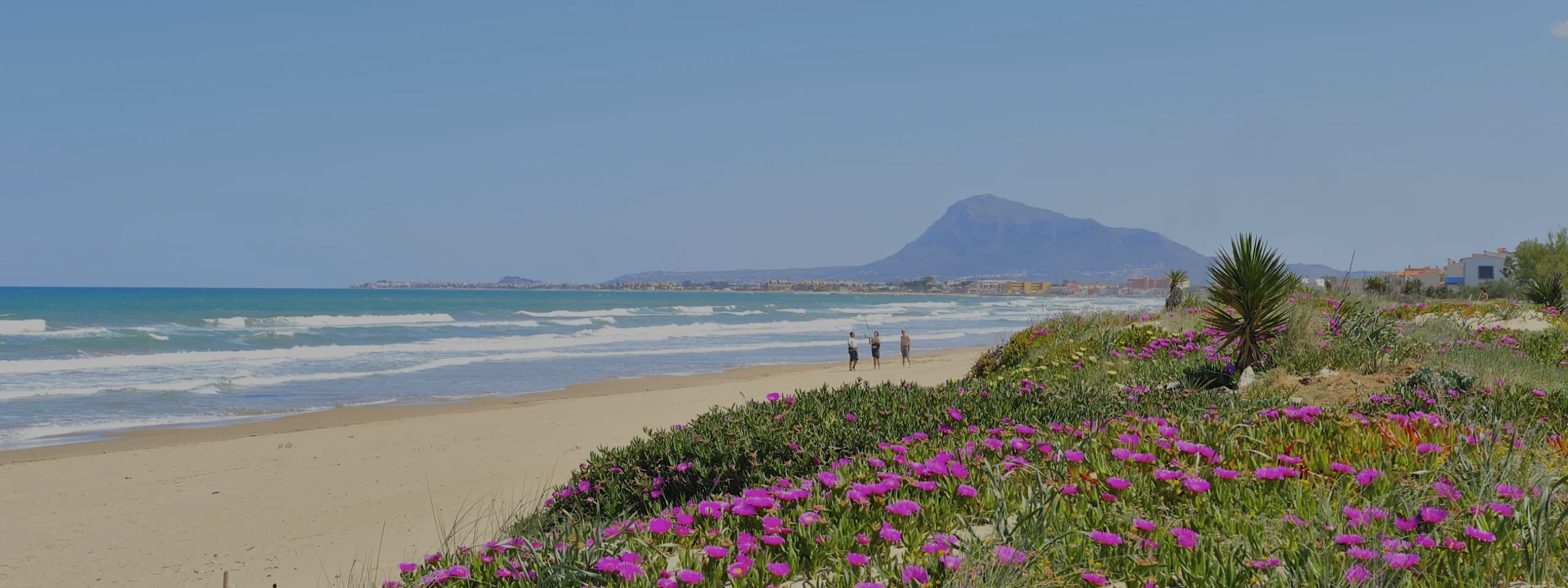
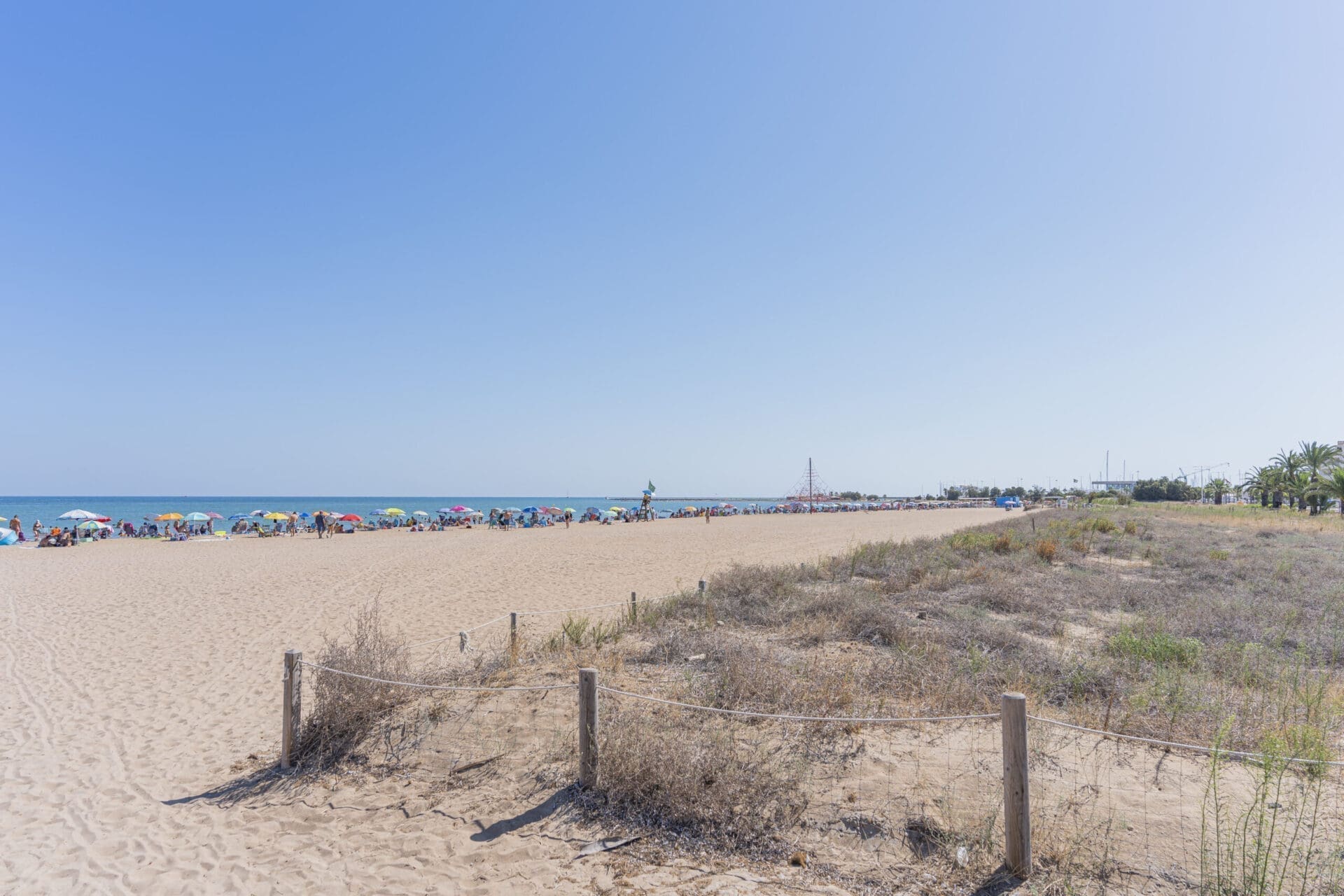
The kentish plover nests in them. This small bird, also known as “the corriolet” is a protected species, classified as vulnerable and threatened by human activity on the beaches (high influx of beach users, mechanical cleaning, loose pets). Faced with this pressure, they take refuge on the best-preserved natural beaches. Their presence is a symptom of good conservation of the beaches and their dune systems. Their care is vital. Therefore, fences are placed on the dunes, so that they are not stepped on by people or pets and to avoid the destruction of the nests of these birds.
The protection with beacons and signage is reinforced during the nesting period, which is usually from March 1 to July 1 approximately. Outside this period the dunes should not be trodden on to preserve the flora and fauna of the dunes, as these birds also take refuge in the dunes.
The kentish plover has suffered a 70% reduction in the Valencian Community in the last 30 years. So if you see a plover, enjoy watching how it runs along the beaches and flies, without disturbing it.
How to contribute to the conservation of the Dunes?
Dune Regeneration:
On the beaches of Les Deveses and other beaches of Dénia you will find dunes in regeneration, with a sign indicating this condition.
The row of planted “plants” are actually sand catchers. These wicker strands (biodegradable material) trap the sand and will help the dunes to gradually gain height. The sand traps are not living elements. However, plant species have already been planted that will help the dunes to take root.The reed (Ammaphila arenarie) will sink its roots in this recovered dune cordon and give it life.