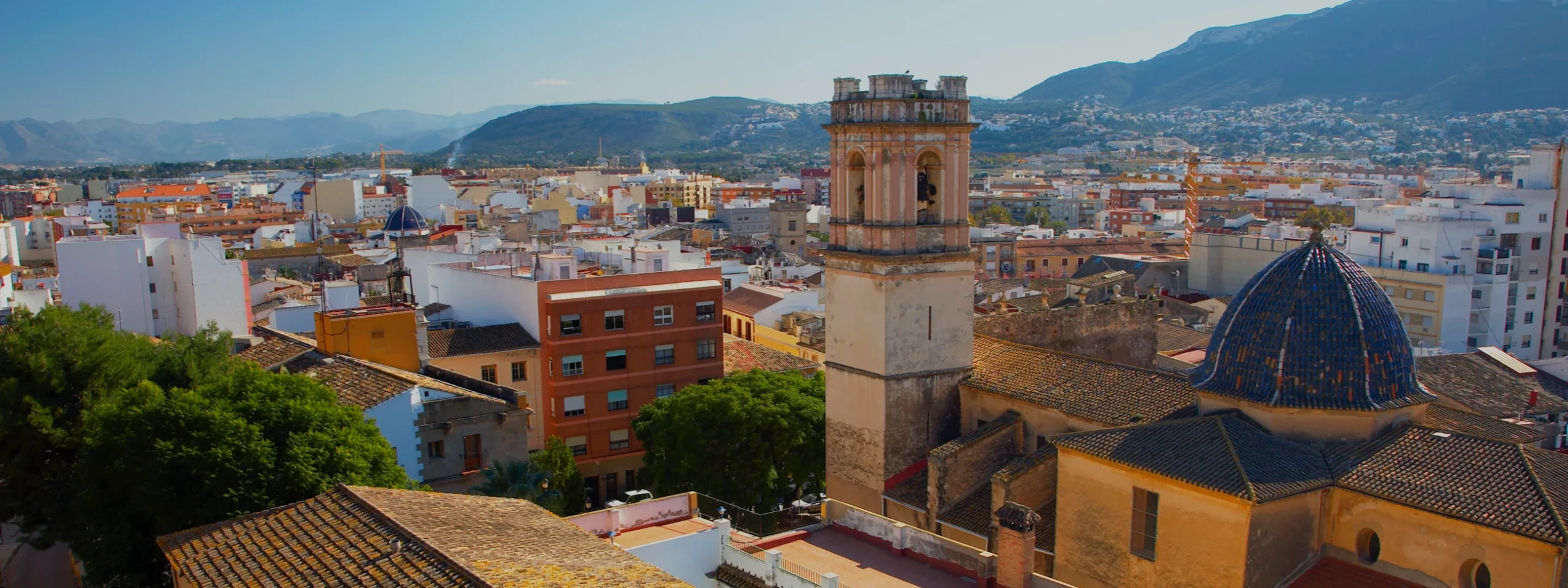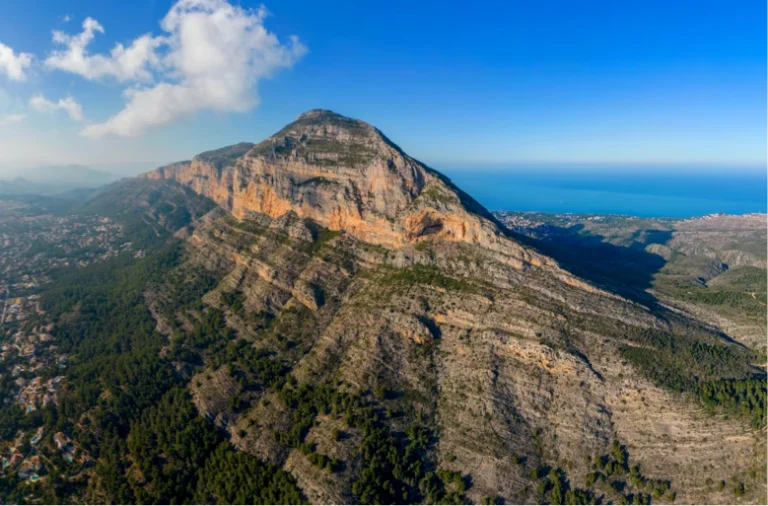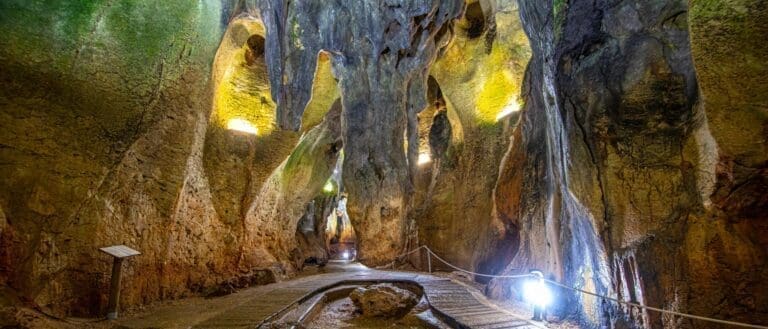
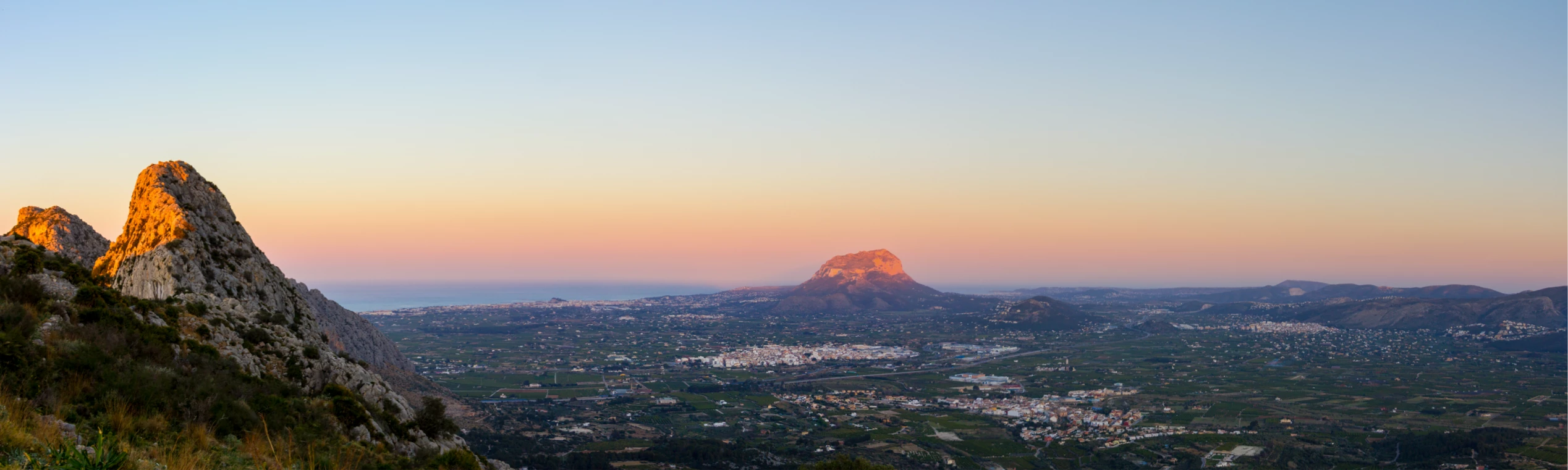
The first thing that stands out is its contrasts. In just a few kilometers, the landscape changes from the peaks of the Montgó or the Sierra de Bèrnia to the fertile inland valleys – Gallinera, Laguar, Ebo, Pop, Alcalà – where almond, orange and cherry trees flourish. And, with hardly any transition, the terrain descends to the Mediterranean, where fine sandy beaches, secret coves and breathtaking cliffs await.
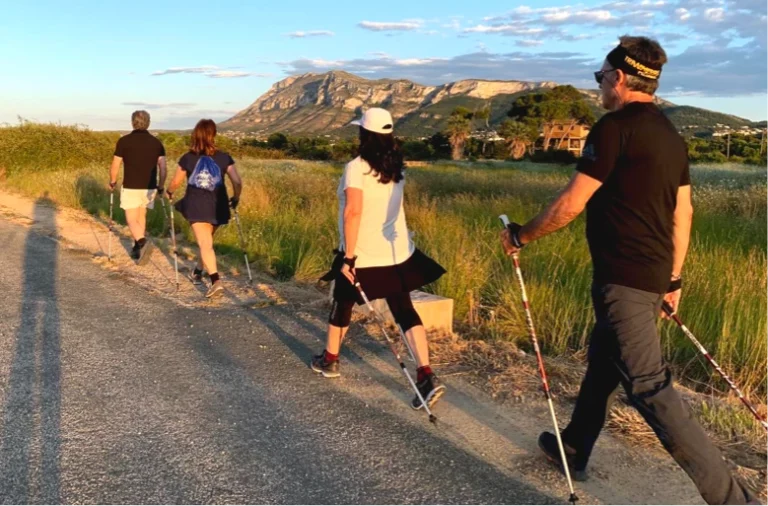
The region also has protected natural enclaves that are real treasures: the Peñón de Ifach, the Montgó, the Marjal de Pego-Oliva and the Cabo de San Antonio Marine Reserve. Spaces that invite both hiking and bird watching, diving or even whale watching.
But the Marina Alta is not only understood through its landscape: also through its people and traditions. Its villages preserve a typical Mediterranean architecture, with riuraus, hermitages and castles that recall centuries of history. The dry stone technique, recognized by UNESCO in 2018, is a living example of this cultural heritage.
Land and sea are also found on the table. Sustainable agriculture provides citrus fruits, olive oil and wines, while fishing offers unique products such as the famous Dénia red shrimp. It is no coincidence that in 2015 UNESCO distinguished Dénia and its region as a Creative City of Gastronomy.
Today, the Marina Alta looks to the future with a firm commitment to responsible tourism. Hotels, restaurants and activities are committed to sustainability to ensure that this corner of the Mediterranean remains a place where nature, culture and hospitality are enjoyed unhurriedly, with authenticity.