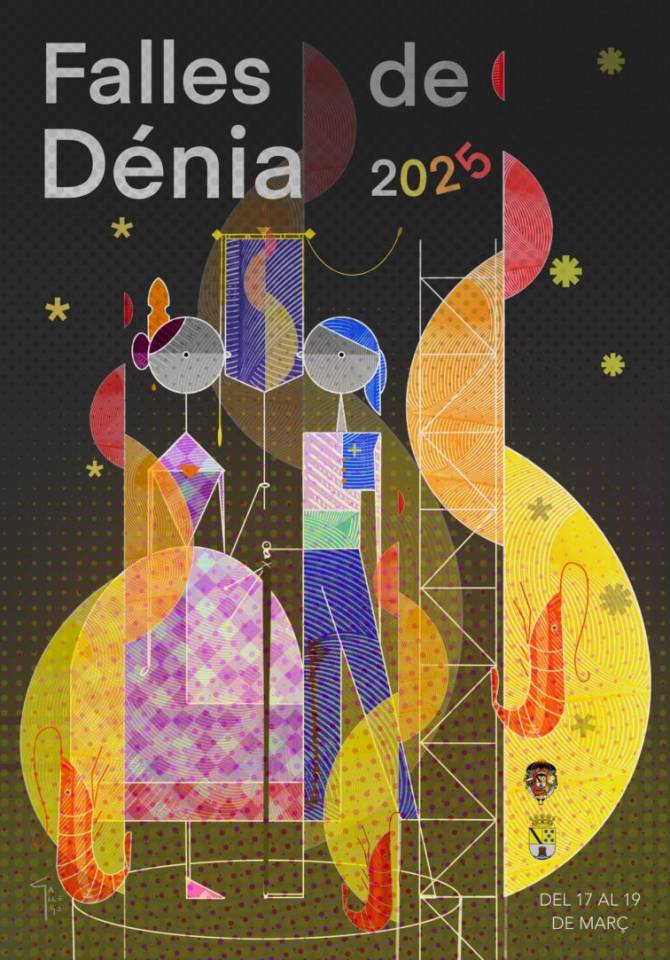
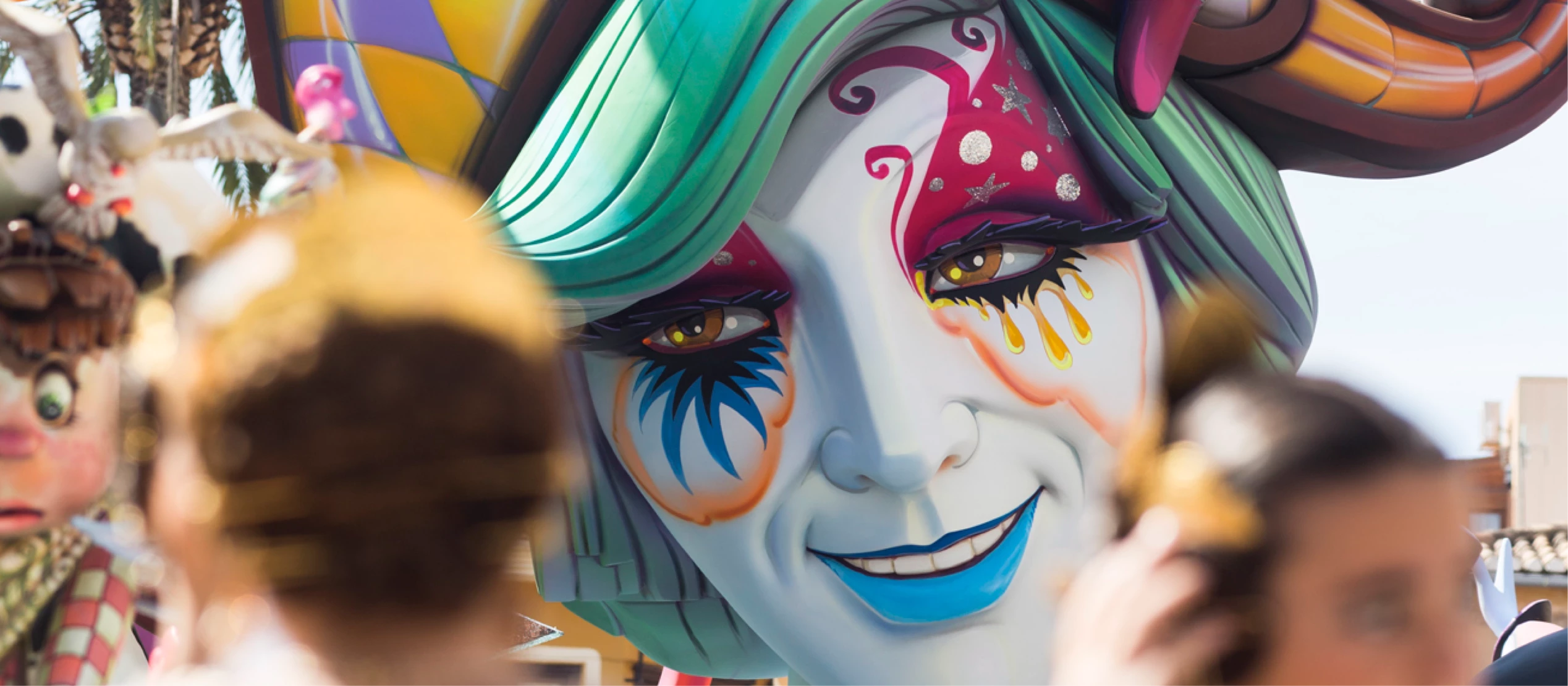
The Fallas of Dénia are a visual and festive spectacle of great local roots. This event, part of the Intangible Cultural Heritage of Humanity, takes place in March, centered on the days from 17 to 19, when the eleven commissions of the city place in the streets artistic sculptural monuments -the “ninots”-, created with wood and papier-mâché, which reflect satirical scenes and witty criticisms on current issues. The whole structure plus the ninots is called Falla.
These Fallas are classified into two sections: the most impressive ones form the “Special Section“, while the rest compete in the “First“. During the week of Fallas, Dénia is full of life, music, gunpowder and community. It all begins with the plantà, when the monuments are raised in their locations, followed by the arrival of jurors to evaluate each falla. Then, gunpowder becomes the protagonist with the mascletà, and the streets are illuminated with parades and floral offerings. The final touch is the cremà: the progressive burning, first of the children’s fallas and then of the big ones, is an act full of emotion and symbolism that officially closes the fallero cycle.
Beyond the central axis of the three days, this festival is lived throughout the year: from gala events and proclamations to exhibitions, brotherhood dinners, appointments, floats (they are made by the Fallas Commissions) and even the emotional crida, a ritual that announces the arrival of the festivities. With more than 2,000 people involved, the Fallas of Dénia are not just an event, they are the reflection of a united community, which between art, fire and camaraderie keeps alive a tradition that excites locals and visitors.
The Crida marks the official start of the Fallas in Dénia, an act full of emotion and symbolism that summons locals and visitors to join the festive rhythm. Held in the emblematic Plaça de la Constitució, this moment brings together the Falleras Mayores de Dénia and municipal authorities on a balcony from which, after reading a festive proclamation and symbolically handing over the keys of the city, they announce the start of the festivities. The atmosphere is filled with expectation, music and joy: families, friends and tourists congregate to live the call that gives way to the intense fallera season. The excitement is often complemented by fireworks that light up the square, generating a visual spectacle that enhances the sense of community and local pride.
More than a simple announcement, the Cridà is an emotional opening ritual that unites everyone in the same feeling. To witness it is to immerse oneself in the magic of the Fallas from its first beat, with the whole community united to welcome the fire, art and tradition that characterize these festivities.
The Ninot Exhibition is an emblematic event within the Fallas calendar in Dénia, in which each commission presents its best figure (“ninot”) in adult and child categories. The aim is to highlight the ingenuity, creativity and message of these works, as the public can actively participate by choosing their favorite. The most valued ninot receives the honor of being pardoned, which means that it is saved from the cremà and becomes part of the festive memory.
In addition to showcasing the high artistic level of fallero artists, this exhibition promotes citizen participation and reinforces community spirit. Installed in a dedicated festive space, it is also occasionally used as a solidarity channel for local causes.
The plantà is the key moment of the Fallas of Dénia: the act in which the Fallas monuments, assembled by the commissions during long hours of collective work, are erected and placed in the street. It is a meticulous and festive installation in which art, tradition and local collaboration converge to give shape to satirical figures full of wit and social criticism.
It is a participatory event that transforms urban spaces into ephemeral exhibitions of great beauty, where neighbors and artists collaborate, create bonds and set the stage for the jury to value them. During the plantà, the city becomes a large open-air workshop, full of creative intensity and collective joy, highlighting the festive spirit of Dénia.
The mascletà is an essential pyrotechnic spectacle in the Fallas of Dénia, considered a sonorous and sensorial rite that impregnates the city with a vibrant rhythm. It is a series of synchronized and successive detonations of gunpowder that create a symphony of noise, vibration and collective emotion. Beyond a simple roar, the mascletà is designed to be activated at key moments of the festival, when the festive atmosphere reaches its maximum splendor. It takes place in central areas of the city and in different neighborhoods, bringing together neighbors and visitors who come to feel the pulse of fire on their skin.
This pyrotechnic act requires great technical skill and careful planning, as the assembly and setting off of the firecrackers and charges must ensure safety, impact and sound coordination. The result is a crescendo of intensity that awakens the senses and reinforces the connection between the fallera community and the public. The mascletà is not only a spectacle but also a shared experience that blends tradition, sound, physical vibrations and a collective sense of belonging. To participate in a mascletà is to immerse oneself in a moment of festive communion, in which the power of sound and the energy of the group transform a pyrotechnic act into a memorable emotion, a reflection of the dynamism and passion that characterize the Fallas of Dénia.
The offering of flowers is a deeply symbolic and emotional act within the Fallas of Dénia. In this ceremony, the falleros and falleras, dressed in their traditional costumes, join in procession to place bouquets before the image of the Virgen de los Desamparados. Each bouquet contributes to form a flowery mantle that envelops the Virgin, transforming the act into a visual spectacle of collective devotion.
Beyond its religious component, this offering is a sign of identity and social cohesion: it unites different commissions and the neighborhood fabric in a common gesture of respect, culture and Valencian tradition. It is one of the moments that best reflect the festive heart of Dénia, full of emotion, community sense and beauty.
The cremà is the culminating act that puts an end to the Fallas in Dénia, a moment full of symbolism and collective emotion.
It consists of burning the fallero monuments -first the children’s figures and then the large ones- in an order that reflects the recognition of their creativity and effort, giving greater prominence to the winning monument. This ritual is not an instantaneous explosion of fire, but a controlled and slow burning, designed to observe how the wooden and cardboard structures are consumed until they turn into ashes. Beyond being a visual and pyrotechnic spectacle, the cremà represents the closing of an artistic and community cycle, invites reflection and celebrates the festive spirit that unites neighbors and visitors around fire, tradition and shared memory.